


Travel Guide
Explore with top rollers, duffels & packs.


Fleece
Jackets
Vests
Shirts
Ski & Snowboard Jackets
Ski & Snowboard Pants
Rain & Wind Jackets
Activewear
Shop All
Fleece
Insulated Jackets
Jackets
Vests
Shirts
Ski & Snowboard Jackets
Ski & Snowboard Pants
Rain & Wind Jackets
Activewear
Shop All
Hiking
Trail Running
Road Running
Casual Shoes
Casual Boots
Winter Boots
Slippers
Sandals
Bike
Climb
Rain
Shop All
Hiking
Trail Running
Road Running
Casual Shoes
Casual Boots
Winter Boots
Slippers
Sandals
Bike
Climb
Rain
Shop All
Hiking Clothing
Hiking Footwear
Backpacking Packs
Technical Daypacks
Hydration Packs
Kid Carriers
Water Bottles
Headlamps
Navigation
Trekking Poles
Shop All
Tents & Shelters
Sleeping Bags
Sleeping Pads
Coolers
Camp Chairs
Camp Tables
Stoves & Grills
Drinkware
Pots & Pans
Kitchen
Lighting
Hammocks
Shop All
Bike Maintenance
Bike Storage & Transportation
Car Racks
Bike Packs & Bags
Bike Lighting & Electronics
Hydration Packs
Water Bottles & Cages
Shop All
Carabiners
Quickdraws
Protection Devices
Belay & Rappel Devices
Ascenders & Descenders
Pitons & Hooks
Pulleys
Bike Racks
Ski & Snowboard Bags
Ski & Snowboard Boot Bags
Fly Fishing Bags & Luggage
Bike Travel Cases
Surfboard Bags & Packs
Sunglasses
Water Bottles
Blankets
Wallets
Water Filters & Purification
Travel Pillows
Power Converters
Audio
Ski & Snowboard Jackets
Ski & Snowboard Pants & Bibs
Midlayers
Baselayers
Ski Socks
Hats, Gloves & Mittens
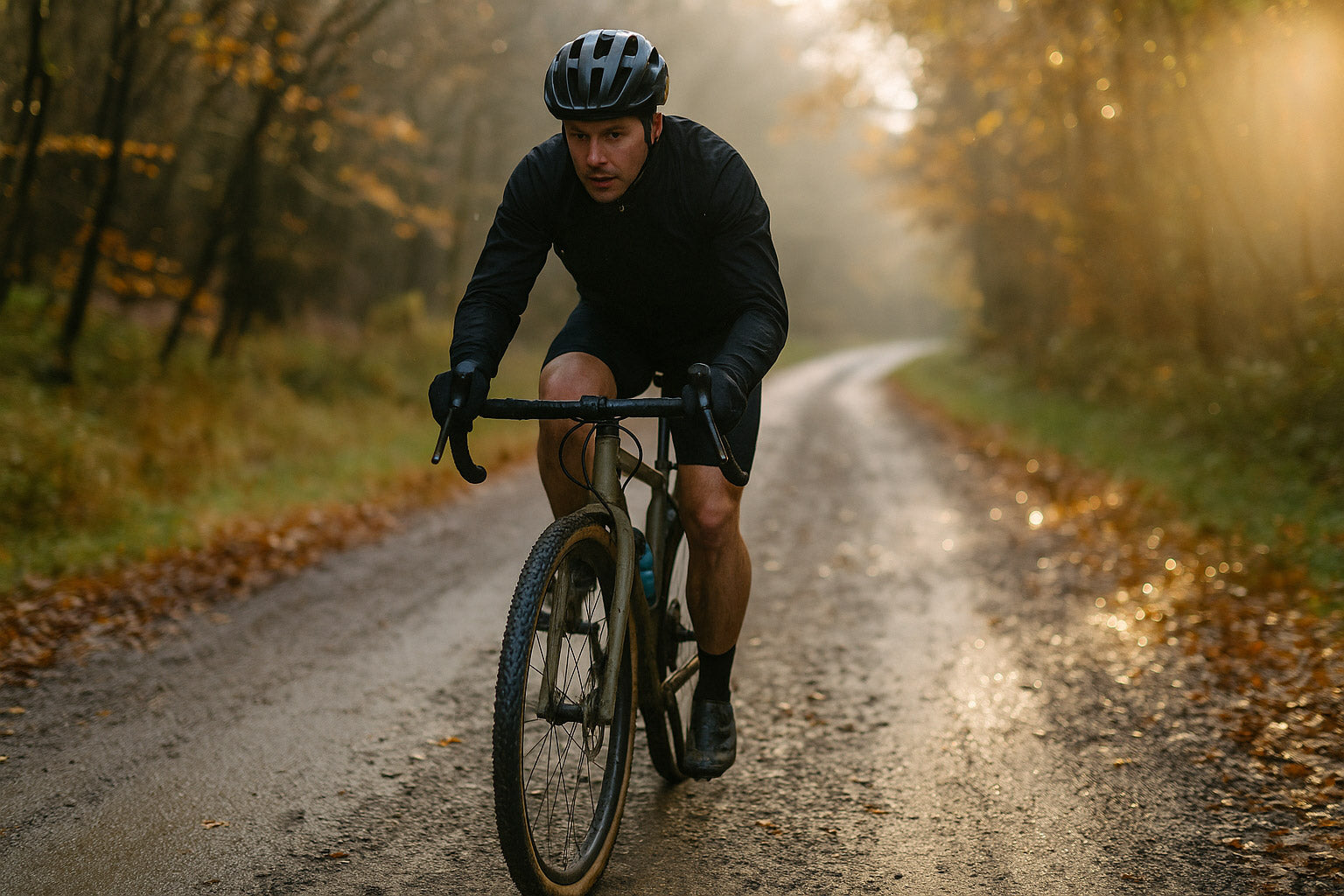
50–57 mm Gravel Tires: Fit Checks, Pressure and Bikepacking Gear
A 50–57 mm tire is a fit decision before it is an upgrade. Check the exact frame, fork, wheel and tire combination before buying, and do not assume that another bicycle's clearance figure applies to yours. Wider is not automatically compatible or better for every route.
Updated by Alpine Extreme on September 18, 2026. This guide separates manufacturer compatibility checks from the clothing, lighting and carrying equipment worth reviewing for a gravel outing.
Start with the frame and fork
Find the manufacturer's tire-clearance guidance for your exact frame and fork revision, wheel size and intended use. Check both ends of the bicycle. A tire's labelled width is not a substitute for its actual installed dimensions or the clearances required by the bicycle manufacturer.
Schwalbe explains that tire dimensions and rim width must be considered together. Its tire-dimensions guidance also distinguishes the tire's internal diameter from its width. Record those details instead of relying on a generic description such as gravel-compatible.
Do not exceed the bicycle manufacturer's approved tire size simply because an unladen wheel appears to turn freely. Ask the bicycle manufacturer or a qualified mechanic to resolve an uncertain combination, including any required clearance for mud and operating conditions.
Check the rim and tire as a pair
Match the tire diameter and width to the rim's approved combinations. Check whether the rim is hooked or hookless, and whether the exact tire model and size are approved for that construction. Schwalbe's tubeless and hookless requirements explicitly say to follow the wheel or rim manufacturer's compatible tire types and widths.
A tire fitting onto a rim is not enough to establish an approved setup. Inner tubes, inserts and similar-looking tire names do not remove the need to check the manufacturer's requirements for the actual components.
Choose pressure for the complete system
There is no single safe or useful pressure for every 50 mm gravel tire. Start with the tire and rim manufacturers' guidance, including their limits, and account for the rider, bicycle and carried equipment. Follow the most restrictive applicable component limit.
Use a calculator that supports your actual tire, rim and load inputs as a starting aid, not permission to exceed manufacturer limits. Recheck the tires before a ride and after changing your load or equipment. Do not copy another rider's pressure solely because the nominal tire width is the same.
Match repair supplies to the tire system
Identify what you can repair with the system fitted to your bike. Check the correct spare tube size, valve requirements, pump connection and the tire manufacturer's instructions for any sealant or repair method. A tubeless repair item is not automatically appropriate for every tire construction or type of damage.
Pack the tools needed for your own wheels and accessories, rather than a generic kit that lacks the necessary interface. A wider tire does not eliminate punctures or the need to know how to use your repair equipment.
Plan lighting for the route and return journey
Compare beam pattern, mounting stability and published runtime at the brightness setting you expect to use. Maximum lumens alone do not establish whether a light is suitable for your speed, terrain or full outing. Allow a reserve and follow applicable road-lighting requirements on connecting roads.
Explore the Velora NightStrike 700 Bike Light Set and our bike lighting collection. Review each product's current specifications and included mounts. The NightPulse LED Visibility Vest is a separate visibility accessory, not a substitute for required bicycle lights.
Review layers and contact points
Check how your clothing fits in a riding position and with the equipment you carry. Compare actual material, weather-protection information and sizing instead of treating the product's name as a guarantee for every temperature.
See the Wosawe Ultralight Reflective Cycling Jacket and Santic StormShell Cycling Jacket, or browse cycling apparel and accessories. For ThermoRide Pro Heated Cycling Insoles, confirm the product-specific sizing, footwear space, battery arrangement and supplied use instructions. No medical or circulation benefit is asserted here.
Check cockpit space with the loaded bike
Lights, bags, cables and a phone holder compete for space. Confirm the supported dimensions and mounting position for each accessory, then check that your controls operate without interference. For example, read the fit details for the GUB G81 Aluminum Phone Holder rather than assuming it fits every phone case or handlebar.
Before ordering, write down the exact model you are replacing, the intended new option and the component it must connect to. Send uncertain fit questions to [email protected]. A related-product link is a shopping aid, not a compatibility guarantee.
Common questions
Can an older gravel bike accept a 50 mm tire?
Only when the exact frame, fork, wheel and tire combination meets the relevant manufacturers' requirements. A bike approved for a smaller maximum should not be treated as approved for 50 mm without manufacturer confirmation.
Does wider always mean lower pressure?
Do not make that adjustment from width alone. Use the complete load, tire construction and rim requirements, and remain within every applicable limit.
Does changing tires mean I need new lights or clothing?
Not automatically. Review the route, riding time, mounting space and conditions. Replace an item because it does not meet a specific need, not because a new tire size appears in the bike's description.
- Choosing a selection results in a full page refresh.
!