


A familiar fall ritual
Before the lifts turn, there’s the swap.
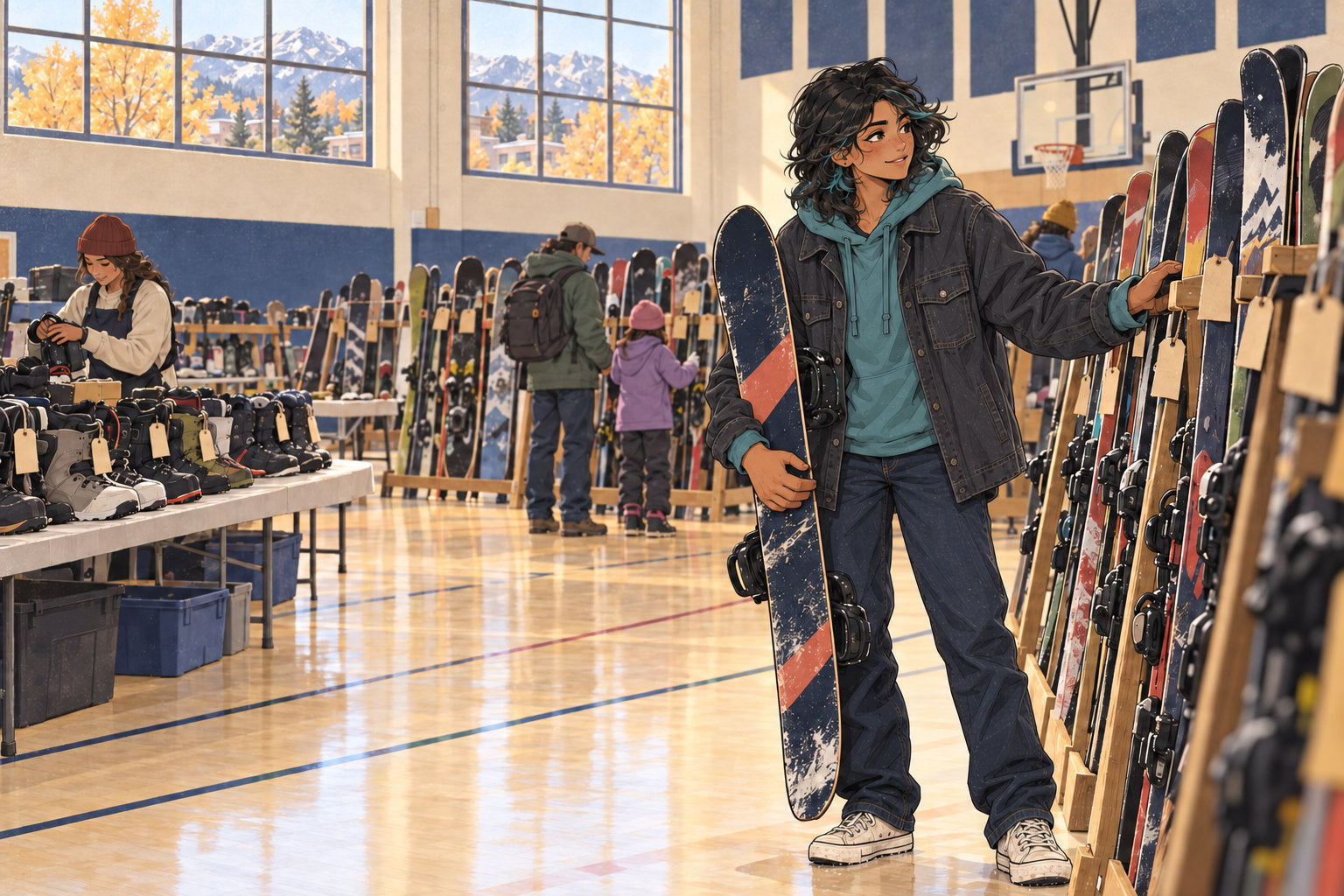
In some ski towns, the line at a school gym or fairground is as reliable a sign of winter as the first scrape of frost off a windshield. Families come looking for the next size up. Racers retire a pair of skis. Someone arrives hoping to sell last year’s setup and walks out carrying something entirely different.
It’s practical, of course. Gear that still has good days left changes hands, and many swaps raise money for local teams, clubs or patrols. But the room itself is part of the appeal: racks of skis leaning together, conversations about boots and snow, and that small rush when you spot exactly what you came for. You don’t have to know anyone to join in.
If this is your first one
How a ski swap works
Most have a public shopping window where you can browse new and used gear. Some sellers price their own items and leave them on consignment; other events have different rules. Prices may be fixed, discounted later in the sale, or handled another way. Admission, payment methods and early-entry tickets also vary. The event card gives the details we could verify, and the organizer’s link has the last word.
Buying? Start with fit, then condition.
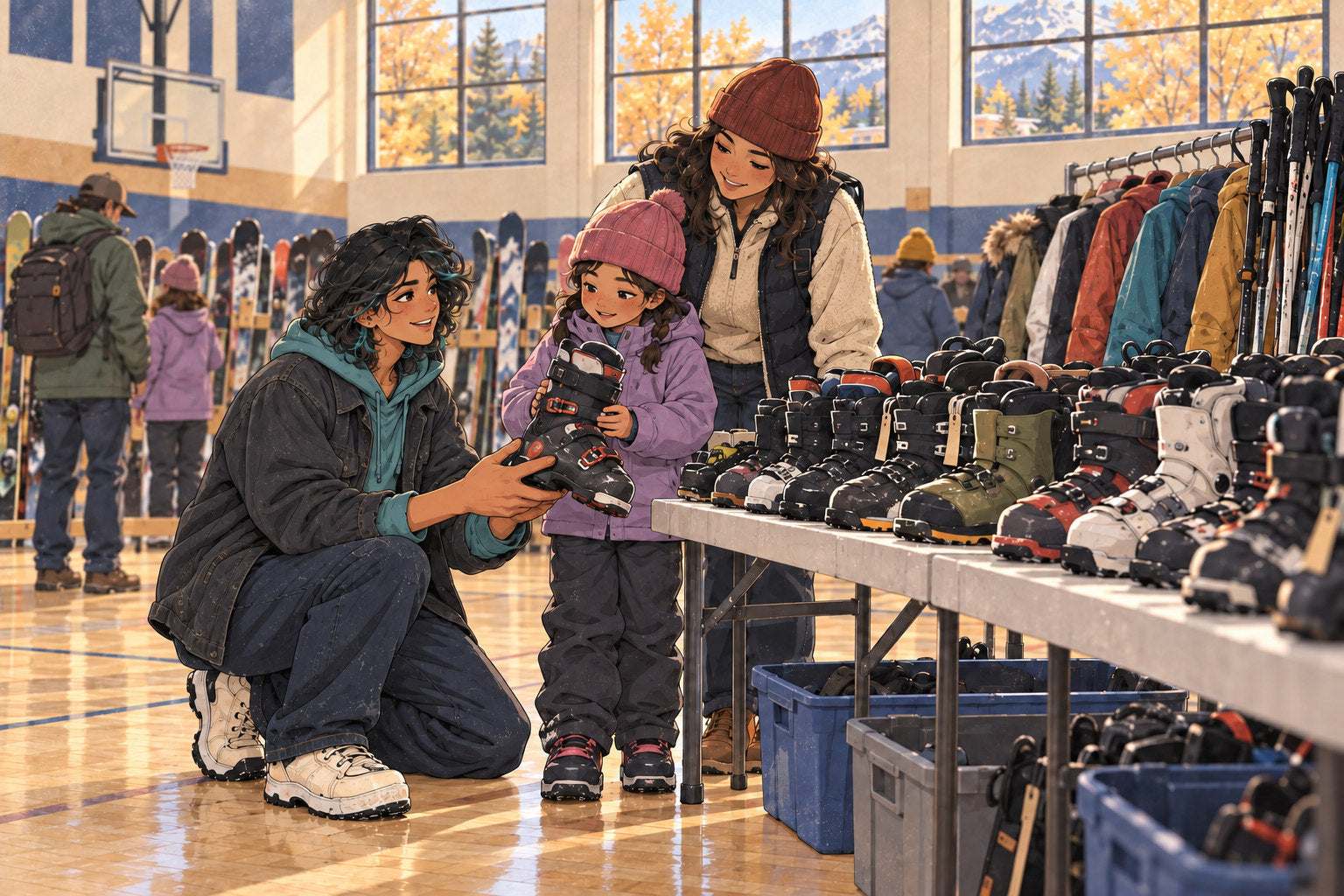
Try boots on with ski socks and allow time to check fit. Look closely at ski and board bases, edges and signs of damage. Ask a qualified shop to assess used bindings for current serviceability and compatibility before relying on them; an old binding is not automatically safe to ski. Be especially cautious with used helmets and protective gear when their impact history is unknown. If you’re unsure, leave it.
If a touring setup catches your eye, our skimo and backcountry gear guide explains the different uses. It won’t tell you whether a used setup fits or is safe; have the specific gear checked.
Selling? Read the rules before you tag anything.
Clean and dry the gear, write down its size and condition, and check the organizer’s accepted categories, registration deadline and tagging instructions. Note the commission or store-credit terms and put pickup time on your calendar. Every swap handles unsold items differently.
Take the next step
There’s probably a roomful of winter gear somewhere within driving distance.
Search from your ZIP code ↑No account, no mailing list. Just a place to start.